
Pope Leo XIV, U.S. artist Bill Moran open Vatican Library exhibit
Posted on September 15th, 2026 by Heather West
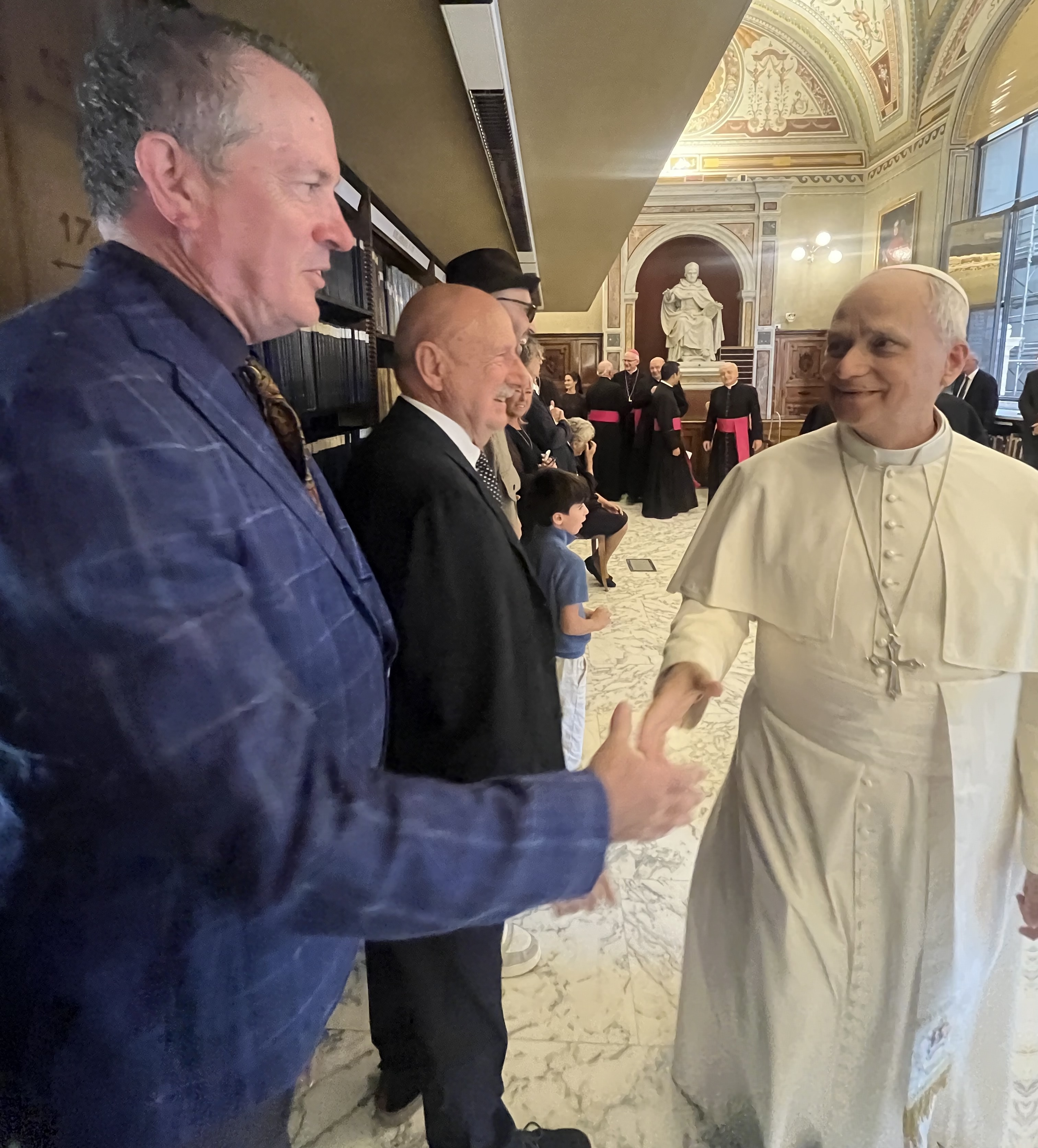 Pope Leo XIV and Minnesota-based artist, Bill Moran, met in Rome on Sept. 14 at The Vatican Library to inaugurate “AQVA. Catastrophe and Wonder” featuring Moran’s typographic LetterFish artworks.
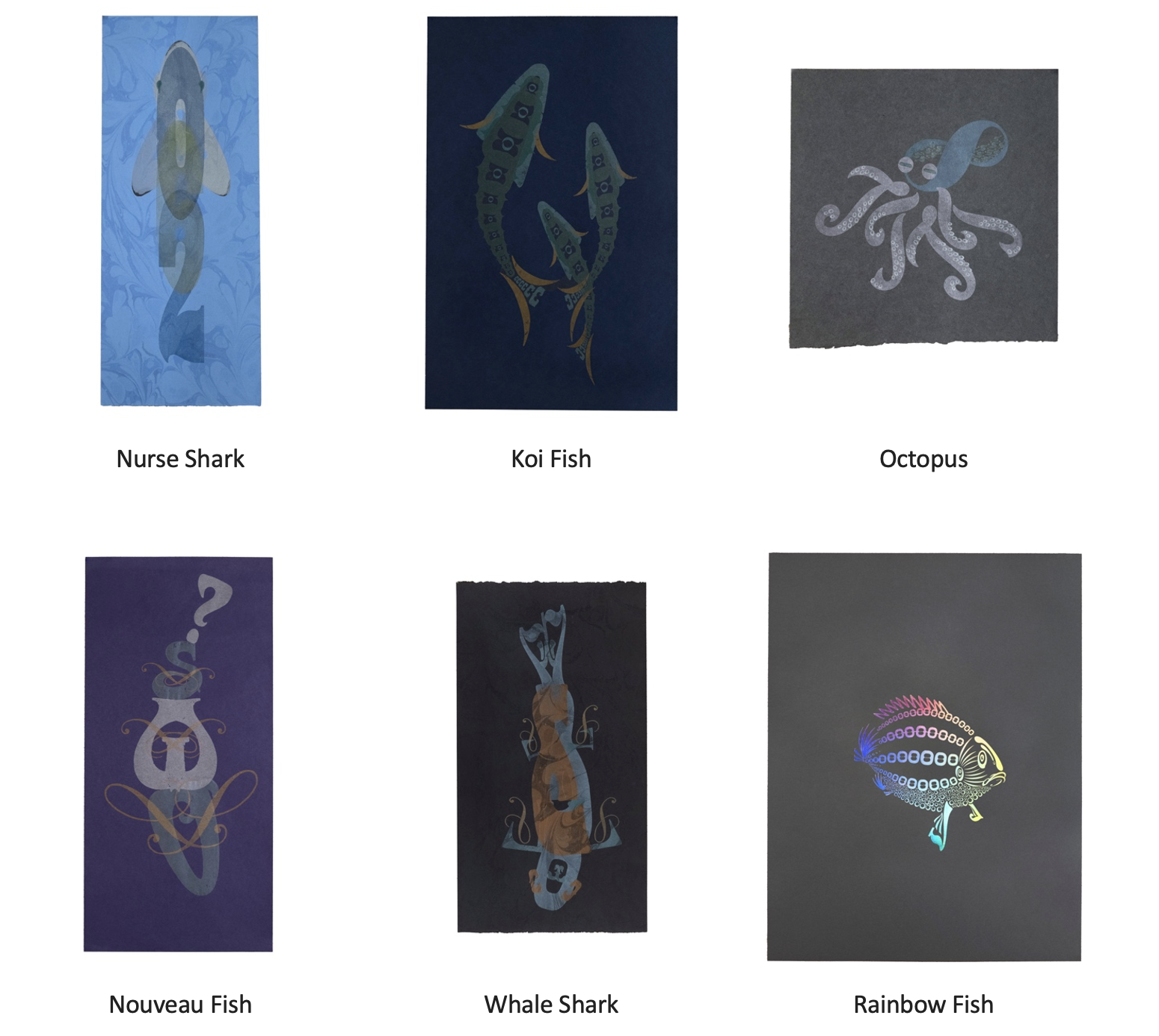
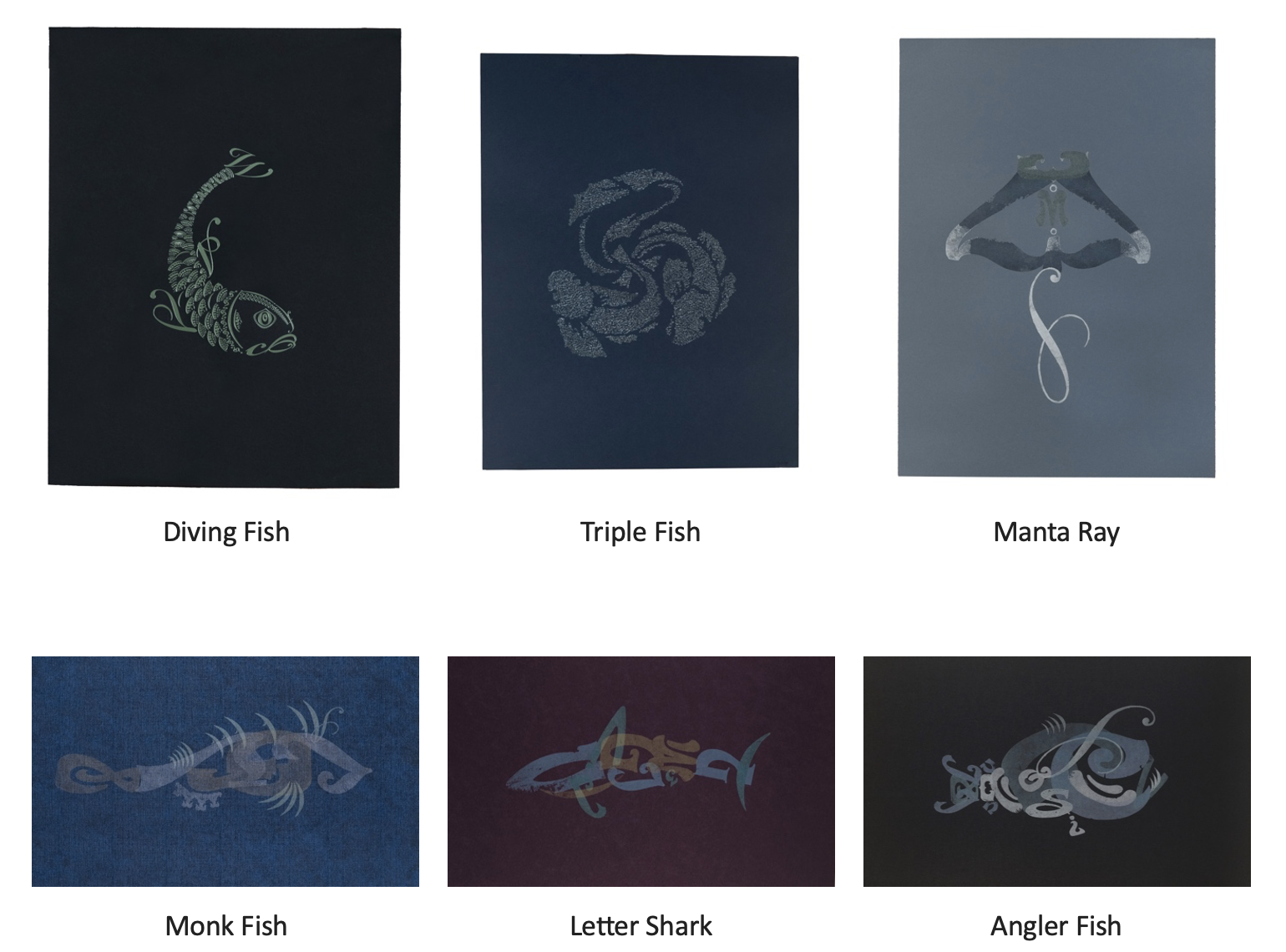
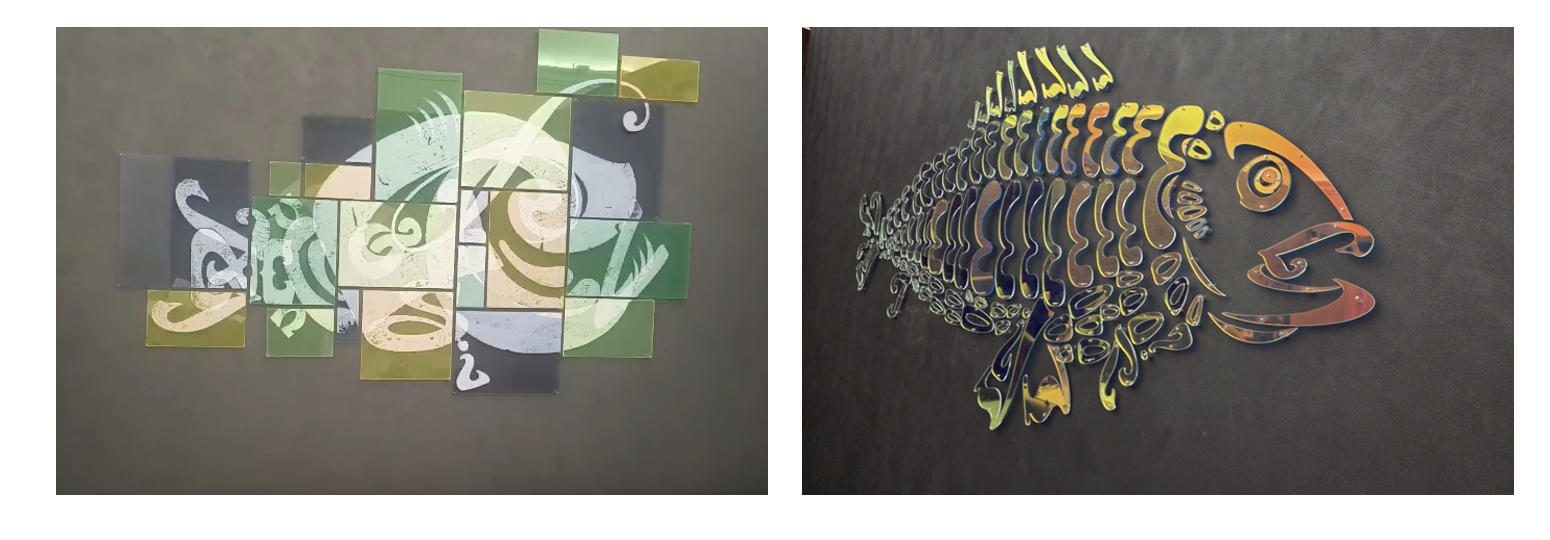
Moran’s new, original works for the Vatican’s water-themed exhibit includes 12 letterpress prints and two sculptural works. He composed each LetterFish sea creature’s form with historic type, colorful and metallic inks, and traditional printing methods. Complementing the physical works on display at the Library, Moran also has designed a free, online build-your-own LetterFish game for players everywhere.
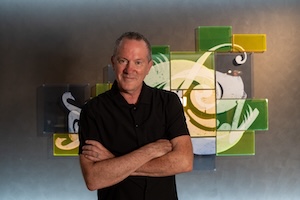 Moran is not only an artist, but also a third-generation letterpress printer, a graphic designer, a typographic historian, a professor at the University of Minnesota’s College of Design, and co-founder of TipoItalia’s study-abroad program in Cornuda, Italy. He also served as Hamilton Wood Type & Printing Museum’s artistic director (2009-2021), helping expand the Wisconsin-based museum’s archive and elevate its recognition as the world’s largest collection of wood type.
“The privilege of making work for the Vatican Library allowed me to unite the past with the present by pairing my family’s traditional printing equipment and vintage wood type to create new original LetterFish,” said Moran.
Representing a new chapter in the centuries-old mission of conservation and dissemination carried out by the Vatican Library, the exhibit in Rome opens to the public Sept. 25, 2026 and runs on selected dates through May 14, 2027.
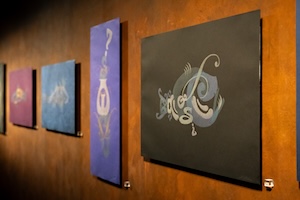 Moran is the only U.S. artist in the exhibition, which also features the French artist JR and the Italian chef Fulvio Pierangelini, each of whom reinterprets the theme and the Library’s historical collections through their own artistic practices. The exhibition is curated by Father Don Giacomo Cardinali, Simona De Crescenzo, Francesca Giannetto and Delio Vania Proverbio.
Enduring Inspiration
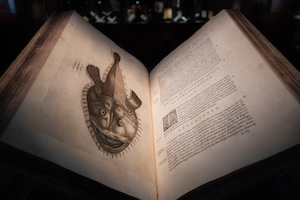 The first in the Library’s five-year exhibition cycle, “AQVA. Catastrophe and Wonder” explores the perception of water as a threatening force, a path of reconciliation and as a vital resource. It also highlights the Library’s Renaissance-era book, “Aquatillium Animalum Historiae.”
Evolving from this book’s realistic fish illustrations, Moran’s modern interpretation imprints the text’s ancient DNA into each LetterFish artwork and celebrates water’s vital connection to all living beings.
“The exhibition ‘AQVA’ also provides an opportunity to celebrate the 470th anniversary of the publication, financed and promoted by the Vatican Library, of the remarkable treatise on fish by the physician Ippolito Salviani, completed in Rome in 1557,” noted Father Giacomo Cardinali, vice prefect and commissioner for exhibition activities.
Artistic Origins
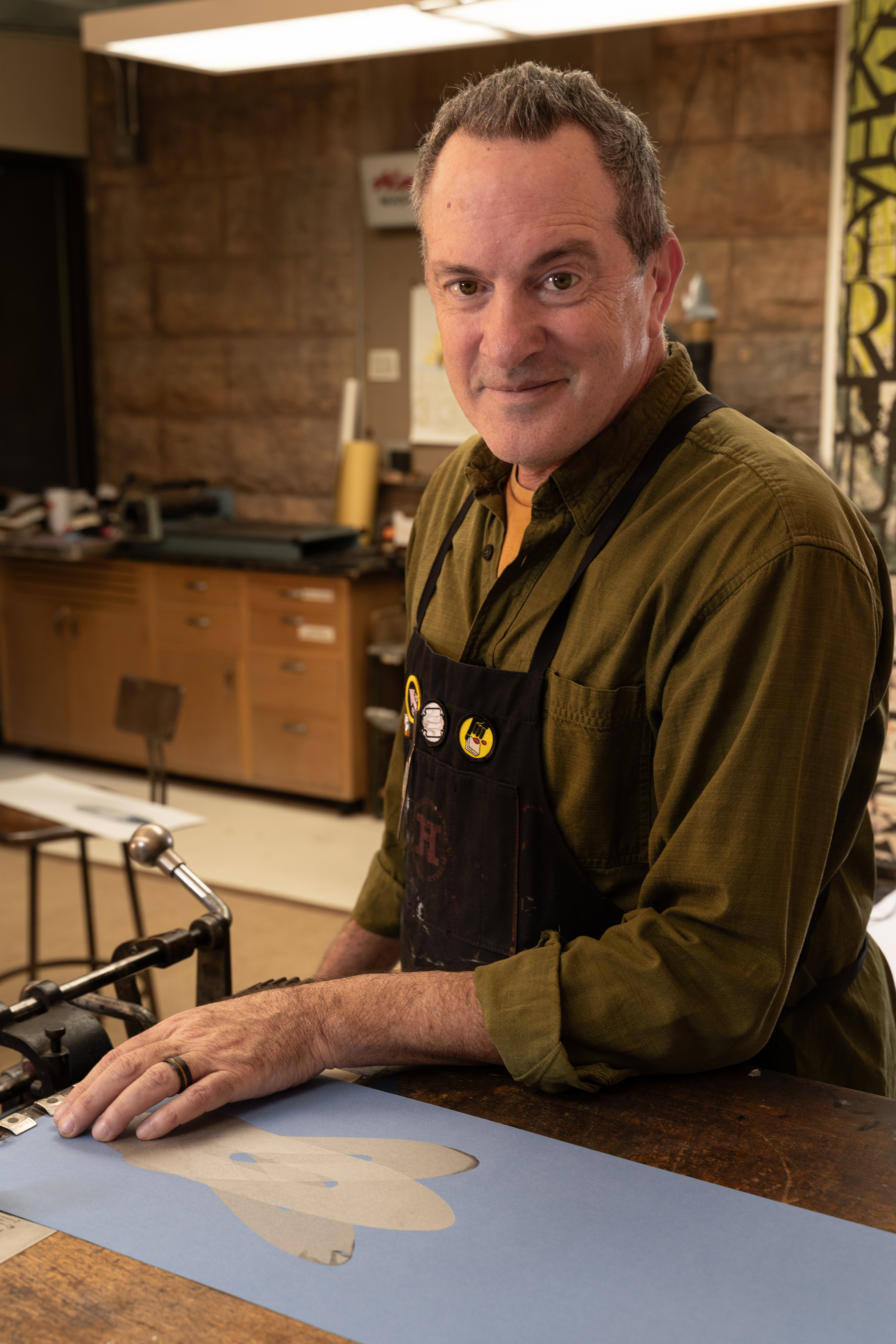 Born to a Midwestern American, Catholic family, Moran’s connection to Italy and the Vatican began with an appreciation for their ancient artistry and illuminated texts.
“Growing up in my family’s Wisconsin print shop, I first learned to see type not just as 26 characters, but as a creative language – something you could compose, shape and bring to life,” said Moran. “As an artist and historian, I blend historic type with contemporary letterpress printing methods to unite the past with the present. Typographic expression connects people and generations, as water interlinks all living creatures.”
Before spawning the LetterFish concept, Moran’s playful typographic LetterBugs prints debuted in 1999 at the St. Paul Art Crawl in Minnesota and have since traveled the globe in exhibitions, collections and archives across the U.S. and Europe. The Vatican Library’s staff and associates saw the LetterBugs prints on view at the Tipoteca Italiana, Italy’s premier museum devoted to Italian printing and type history.
Creative Methods
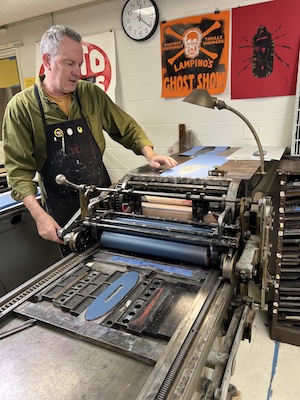 All the letterforms used to create the LetterFish artworks for the Library’s “AQVA. Catastrophe and Wonder” exhibit come from the Art Nouveau wood type collection housed by Tipoteca Italiana.
The type itself was cut between 1890 and 1930 by a variety of wood type makers throughout Europe. The Library also requested Moran use these ornate typefaces when designing “Agenda 2027 / Agende annuali della Bilioteca Apostolica Vaticana” and includes reproductions of LetterFish artworks.
Moran printed the original LetterFish on exhibit in the Library using a Vandercook Model 219 manufactured in 1946 and so-named because of its 19-inch-wide press bed. He acquired it from Augsburg Fortress Publishers in Minneapolis, where it saw daily use for this religious publisher.
“Neither the makers of this press nor my grandfather Frank Moran could have envisioned how these machines have lived on into the digital age where the word ‘obsolete’ is applied on a daily basis.”
“The Vatican Library gave me freedom to make whatever fish I wanted,” said Moran.
His 12 LetterFish prints are:
• Nurse Shark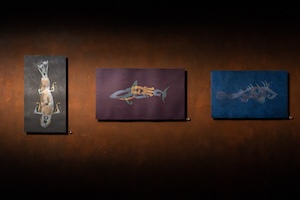
• Koi Fish
• Octopus
• Nouveau Fish
• Whale Shark
• Rainbow Fish
• Diving Fish
• Triple Fish
• Monk Fish
• Manta Ray
• Letter Shark
• Angler Fish
Along with the printed works, LetterFish take flight in two sculptural forms.
Global Connections
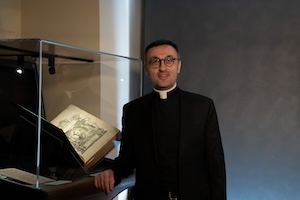
“The starting point of the entire exhibition cycle was Gaetano Volpi’s bibliophilic treatise ‘Del furore d’aver libri’ (1756), which lists the dangers threatening the preservation of books: from water to fire, from light to animals, and even the damage inflicted by human beings themselves on their cultural heritage. In the belief that, in the face of fear, it is wiser to pause and move through it, we enlisted three extraordinarily creative minds – an artist, a typographer and a chef – and discovered unexpected horizons precisely within what usually frightens us,” said Father Giacomo Cardinali.
“Through decades of studying and teaching typography, I’m thankful not just for the knowledge and inspiration I’ve gained, but also for the connections forged with other artists, printers and cultural institutions around the world,” said Moran. “I feel equally at home in the American Midwest as I feel welcomed in Italy and the Vatican.”
“AQVA. Catastrophe and Wonder” – A five-year cycle
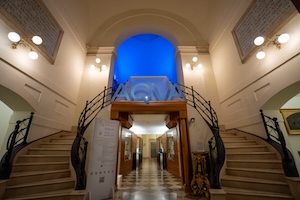
He continued, “These exhibitions are intended to foster dialogue between contemporary art and the Library’s centuries-old heritage. On several occasions, the Pope has emphasized fidelity to the past and fidelity to the future. The present, including the present of this exhibition, can become the home where past and future meet as friends. Through its own distinctive gestures, the Apostolic Library – the Library of the Apostle, the Library of the Pope – wishes to contribute to the building of this home.”
About the Vatican Apostolic Library
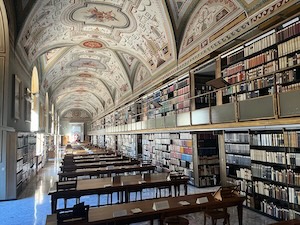
From the Scrinium, documented as early as the 4th century, the Library began its modern history with Pope Nicholas V, who in the mid-15th century decided to open the papal book collections to scholars (“pro communi doctorum virorum commodo,” Brief of April 30, 1451), and with Pope Sixtus IV, who provided a more stable organizational structure with the “Ad decorem militantis Ecclesiae” of June 15, 1475.
Its vast collections – comprising manuscripts, archival materials, printed volumes both ancient and modern, coins and medals, prints and drawings, as well as cartographic and photographic materials – have always been accessible to qualified scholars from around the world, regardless of race, religion, origin, or culture. The Library specializes primarily in philological and historical disciplines, and, retrospectively, also in theology, law, and the sciences.
***
Filed under: Events, Letterpress